
Memorials

His was a life of achievements – a great lawyer, pioneer land developer, public servant and a Tampa booster. Had the honor of serving as State's Attorney, Tampa City Attorney, Port Commissioner, and Supt. of Public Works. In 1892, converted 200 acres of an alligator infested wilderness into the City of West Tampa. Donated lands and buildings to cigar manufacturers, constructed the Fortune St. bridge and a streetcar line. In 1908, donated 40 acres for the creation of Macfarlane Park.
... Read More

2,900 foot long, 34 foot wide, two-lane bridge across the James River. Named for 18th-Century Huguenots who settled in Virginia to escape religious persecution in France.

High quality brownstone was quarried near here 1863-1929, and sold across the nation as a preferred masonry material of builders. The Hummelstown Brownstone Company, founded by Allen Walton, employed immigrant skilled stonecutters and laborers in its quarries.
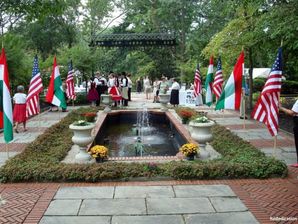
This memorial garden commemorates the journey of the Hungarian people to America. It contains three bust of prominent figures of the Hungarian community. These figures are Endre Ady, Imre Madach and Joseph Remenyi . This garden encompasses a feeling of peace and acceptance.
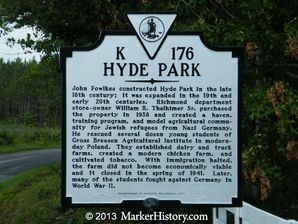
Hyde Park was a safe space of Jewish immigrant from Germany during the tragic time of World War II. As the community grew, Hyde Park was further recognized for its accepting, generous nature. Even after the conclusion of the war and when many jews started to move away, Hyde Park remained a safe space for all refugees including those from Poland.

Icaria-Speranza was a utopian community based on the writings of French philosopher Etienne Cabet. In 1881, at Cloverdale, French immigrant families led by the Dehay and Leroux families began their social experiment in cooperative living based on solidarity and depending on an agrarian economy. It lasted until 1886. Icaria-Speranza was the only Icarian colony in California and the last of seven established throughout the United States. On this site stood the Icarian schoolhouse, deeded to the... Read More
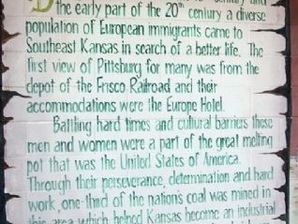
During the latter half of the 19th century and the early part of the 20th century a diverse population of European immigrants came to Southeast Kansas in search of a better life. The first view of Pittsburg for many was from the depot of the Frisco Railroad and their accommodations were the Europe Hotel.
Battling hard times and cultural barriers these men and women were a part of the great melting pot that was the United States of America. Through their perseverance, determination and hard work... Read More