
Memorials
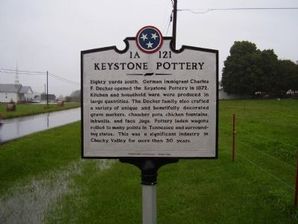
Eighty yards south. German immigrant Charles F. Decker opened the Keystone Pottery in 1872. Kitchen and household ware were produced in large quantities. The Decker family also crafted a variety of unique and beautifully decorated grave markers, chamber pots, chicken fountains, inkwells, and face jugs. Pottery laden wagons rolled to many points in Tennessee and surrounding states. This was a significant industry in Chucky valley for more than 30 years.
Kindred Spirits commemorates the 1847 donation by the Native American Choctaw People to Irish famine relief during the Great Hunger, despite the Choctaw themselves living in hardship and poverty and having recently endured the Trail of Tears.
The sculpture commemorates the generosity of the native North American Choctaw Indian Nation during the Great Hunger in Ireland of 1845 - 1851. Moved by news of starvation in 1847, a group of Choctaws in Oklahoma organized a relief fund from their own meager resources, raising $170 to forward on to the US famine relief organization. That would be tens of thousands of dollars in today's money. It was a show of solidarity with the Irish people, having suffered a similar fate themselves just 16... Read More

(tablet on back of base)
David Kalākaua was born on November 16, 1836. He succeeded to the throne on February 12, 1874, and ruled with his queen, Kapi‘olani. King Kalākaua was the catalyst for the revival and flowering of Hawaiian intellectual and artistic traditions that took place in the last quarter of the 19th century.
He was an accomplished musician and, among other chants and songs, composed he words of “Hawai‘i Pono’i,” now the State of Hawaii’s official anthem. His motto was “Ho‘oulu... Read More

Typical of the frame L-plan cottages which dotted the isthmus in the last half of the Nineteenth Century, the Klose cottage is a vestige of immigrant housing in that period. Adolph Klose, a Prussian immigrant, was a self-employed tailor when he had this house built.
The site was a major Native American trade center for hundreds of years prior to becoming a market place for fur trades after 1750. The villages run through Mercer County, North Dakota ending at the confluence of the Missouri River near Stanton. The site contains a reconstruction of the trading post earthlodge as well as houses many hiking trails along the river.
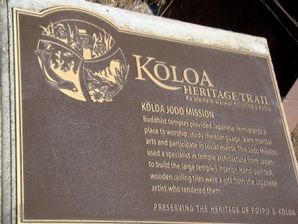
Buddhist temples provided Japanese immigrants a place to worship, study their language, learn martial arts and participate in social events. This Jodo Mission used a specialist in temple architecture from Japan to build the large temple’s interior. Hand-painted, wooden ceiling tiles were a gift from he Japanese artist who rendered them.
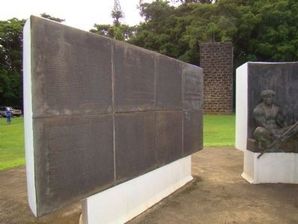
The Beginning. Near this site, on September 12, 1835, William Hooper began clearing 12 acres of land to plant sugar cane. The land was part of 980 acres leased by Hooper’s employer, Ladd & Co. of Honolulu. The land was leased from King Kamehameha III at $300 a year for 50 years beginning July 29, 1835.
Sugarcane grew in Hawaii before the Western discovery of the islands in 1788, apparently brought to Hawaii by the Polynesian voyagers who first settled the islands. But Ladd & Co... Read More

This memorial is to commemorate American soldiers and allies who sacrificed during the Korean War.