
Memorials
The Syrian Garden is part of the Cleveland Cultural Gardens Federation, intended to immortalize the rich and diverse history and culture of Syria and its people throughout the ages. The Garden contains elements from different aspects of Syrian heritage: the Arches of Palmyra, the Amphitheater of Basra, the Syrian Arch and the Arabic Fountain, all decorated with authentic colors.

In the summer of 1862, after years of broken treaty promises and late payments that fueled growing tensions and conflict, some Dakota began an attempt to forcibly reclaim their homeland. After attacking the Redwood (Lower Sioux) Agency on August 18 — the beginning of what became known as the U.S.–Dakota War of 1862 — the Dakota moved toward New Ulm. In their path stood a small settlement known as Milford. There, unprepared for battle, 53 of Milford’s residents were killed in a single day. As... Read More
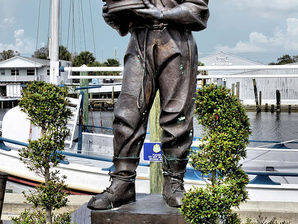
The bronze copper statue stands in the heart of Tarpon Springs, a Greek community that started the center of Florida's sponge industry in 1890. It was erected to commemorate Greek immigrants that moved from Greece to become sponge divers as generations before them have done so in America.
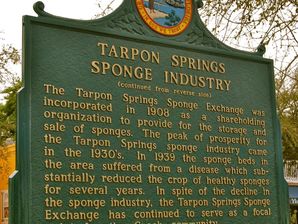
City dedicated sign signifying the importance of Tarpon Springs to the Greek immigrants and Florida's sponge industry.

During the 1880s, many Czech Protestant immigrants who settled in the Taylor area were members of the Unity of the Brethren, founded in 1457 by followers of the Czech reformer and martyr Jan Hus. These local Brethren found it difficult to worship in area Protestant churches because of the language barrier – most conducted services in German or English. As a result, the Czech immigrants joined together to revive practices of the Unity of the Brethren and worship in their native language.
The Rev... Read More

The construction of these two buildings is associated with the first significant phase of commercial development in Tempe. The bakery complex was owned by William Hilge, a German immigrant, who produced bread in ovens and delivered it in Tempe and Mesa. In 1907, the Craig family purchased the buildings and converted them to a residence. Their daughter, Estelle, later married Roy Hackett, and lived on the property until it was sold to the City of Tempe in 1974.
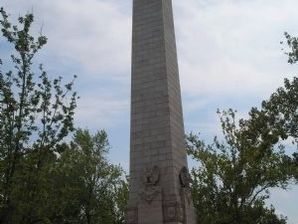
103 ft tall obelisk of marble bricks with inscriptions dedicated to the founding of the "first permanent colony of the English people."
Constructed by US Government for 300th anniversary of the founding of Jamestown.

Aaron Levy, a Jewish immigrant who founded this village in 1786, donated ground for Lutheran and Reformed congregations here and presented them with a pewter communion set. In remembrance of his generosity, 30,000 people gathered in Aaronsburg on October 23, 1949, for a day-long celebration of religious and racial understanding. It included a huge outdoor pageant on a natural stage just north of this site.
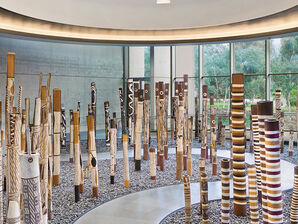
Commemorating the aboriginal lives lost in war and the resilience of indigenous peoples, The Aboriginal Memorial is made up of 200 hollow log coffins. These hollow logs were inspired by the mortuary ceremony of Central Arnhem Land where burial practices are performed to ensure safety for the spirit of the deceased.