
Memorials
The Aboriginal Memorial is a work of contemporary Indigenous Australian art from the late 1980s and is located in the National Gallery of Australia. It comprises 200 traditional hollow log coffins or pole for each year of European settlement, representing the Aboriginal people who died defending their land and denied a proper burial. The poles were made by 43 artists from Ramingining and several surrounding communities in Central Arnhem Land Northern Territory, Australia.

On March 26, 1872 at 2:30AM, one of the largest earthquakes ever recorded destroyed 52 out of the 59 buildings in Lone Pine.
Because of the scarcity of building materials the largely immigrant population of Lone Pine, (estimated 250-300), constructed buildings made of un-reinforced adobe and stone.
This adobe wall is what remains of the general store, established in 1869 by Charles and Madeleine Meysan. This wall is the only remaining example of architecture in Lone Pine before the... Read More
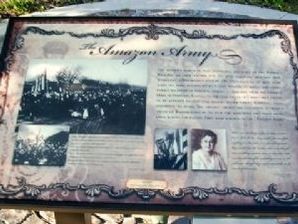
The women’s march of 1921 epitomizes the spirit of the Kansas Balkans, an area known for its rich cultural heritage and turbulent strike-ridden history. On December 12 of that year, 3,000 (by some reports up to 6,000) women—wives and other female relatives of striking miners—marched from the Miner’s Hall in Franklin, Kansas, to the coal fields of Crawford County in an attempt to stop scab miners (replacement workers) from reporting to work. The protest caused the governor to send a troop of... Read More
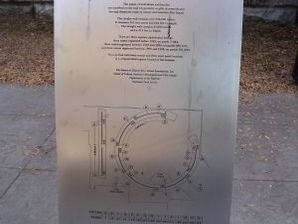
The American Immigrant Wall of Honor ® celebrates the peopling of America. The names of individuals and families are inscribed on the wall for posterity as gifts of remembrance through donations made to restore and maintain Ellis Island. The circular wall contains over 500,000 names. It measures 262 feet across and 664 feet in length. The straight wall contains 56,000 names and is 213 feet in length. There are three separate alphabetical listings: those names registered before 1993, on... Read More
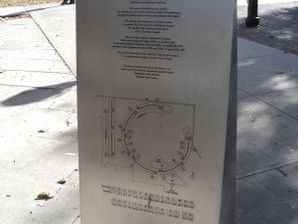
The American Immigrant Wall of Honor ® celebrates the peopling of America. The names of individuals and families are inscribed on the wall for posterity as gifts of remembrance through donations made to restore and maintain Ellis Island. The circular wall contains over 500,000 names. It measures 262 feet across and 664 feet in length. The straight wall contains 56,000 names and is 213 feet in length. There are three separate alphabetical listings: those names registered before 1993, on... Read More

Front
The lively scene around you began with an arts movement in the 1950s. Musicians, dancers, and artists found centrally located 18th Street attractive as declining rents made it affordable.
Early on, jazz guitarist Charlie Byrd brought fame to the Show Boad Lounge at 2477 18th Street. Byrd, Keter Betts, and Stan Getz introduced Americans to Brazilian jazz with their best-selling album Jazz Samba (1962). The album was recorded at nearby All Souls Unitarian Church. Byrd headlined at the... Read More

[Marker mounted to the left of the entrance door.]
This building is the first Basque Hotel built near the Central Pacific Railroad lines that brought many new immigrants to Fresno and the San Joaquin Valley.
It was one of several establishments that catered to Basque settlers and their families in the valley. The combined hotel, restaurant, bar and handball court soon became a center of cultural activity for the Basque community in Fresno County and other parts of the valley. The good food... Read More
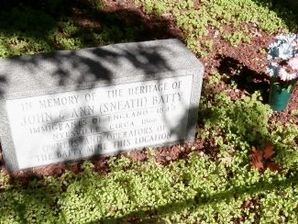
Front
In memory of the heritage of
John & Ann (Sneath) Batty
———————————
Immigrants of England 1844
Nyesville — Circa 1866
———————————
Owners and Operators of
The Batty Mine this Location
Obverse
John & Ann Batty
Parents of: Charlie
Grandparents of: John, Frank, Harold, Charles
Erected 1994 by
Jim & Winifred Batty Warren
Great Granparents of: Winifred — Daughter of: Harold