
Memorials
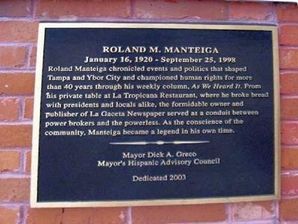
Roland Manteiga chronicled events and politics that shaped Tampa and Ybor city and championed human rights for more than 40 years through his weekly column “As we heard it.” From his private table at La Tropicana Restaurant, where he broke bread with presidents and locals alike, this formidable owner and publisher of La Gaceta newspaper served as a conduit between power brokers and the powerless. As the conscience of the community, Manteiga became a legend in his own time.

This hill, with its sweeping views of Washington and the Potomac, has tantalized visionaries since the 1800s. But few of their plans have been built. In 1873 businessman and city commissioner Thomas P. Morgan (whose name survives as part of Adams-Morgan) created Oak Lawn, a four-story, Second Empire mansion, where the upper edge of the Washington Hilton sits today. Oak Lawn honored the property's 400-year-old "Treaty Oak," said to be the site of treaty negotiations between... Read More
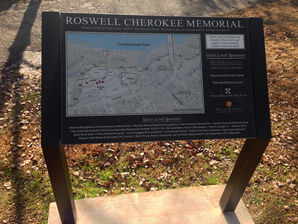
The Roswell Cherokee Memorial is comprised of a series of plaques on rocks along the Chattahoochee River in Roswell, GA. These plaques tell the history of the Cherokee people and the story of their relocation through the Trail of Tears. This memorial is meant to honor the Cherokee who used to live in the area and to remember how they were affected by the Trail of Tears and relocation of Native American groups.

A descendant of the Huguenot immigrant Peter Rucker, John Rucker (d. 1794) settled east of here on Rippin’s Run, and built Friendly Acres, the first of many Rucker family dwellings in the area. He founded the village of Ruckersville, naming it for his uncle, Captain John Rucker, who was instrumental in selecting the site for St. Mark’s Parish Church just west of here in 1732.
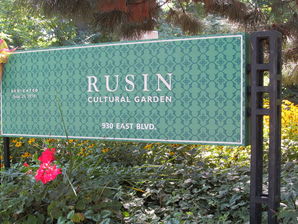
This cultural garden commemorates the Rusins, which are an Eastern Slavic group who immigrated to Cleveland during the 1880's-1920's. The culture of the Rusins is celebrated in this memorial as well as an Alexander Duchnovich. Ducknovich is an important figure of in the Rusin community who worked as a Greek Catholic priest. He is beloved for his literary works of prose and poetry in the Rusin language during a time that the language was threatened by Hungarian rule in the 19th century.... Read More

Thomas Rutherfoord, a Scottish immigrant, built a flour mill on this site around 1800, using water power from the James River and Kanawha Canal. The ruins of the stone foundation can still be seen. Grain milling was the earliest industrial use of the Tredegar site, and was critical to Richmond’s development as an industrial city that was home to the largest flour milling operations in the world. In 1812, Edward Cunningham purchased Rutherfoord’s mill.
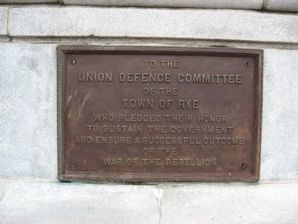
To The
Union Defence Committee
of the
Town of Rye
Who Pledged Their Honor
To Sustain the Government
And Ensure a Successful Outcome
of the
War of the Rebellion

Fifty-three years before the Declaration of Independence, five years before New Orleans had a permanent church, immigrants to the German Coast built on the west bank a log chapel to acknowledge their dependence upon God and to express their thanks to Him for leading them to this fertile land. With gratitude we the people of St. Charles Borromeo parish, heirs of the east bank church erected in 1740, and of its successor "The Little Red Church," 1806-1921, memorialize our ancestors... Read More
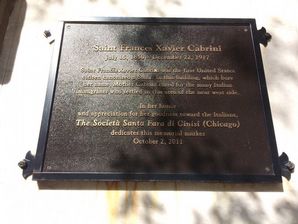
Saint Frances Xavier Cabrini was the first United States citizen canonized a Saint. In this building which bore her name, Mother Cabrini cared for the many Italian Immigrants who settled in this area of the near west side.
In her honor
and appreciation for her goodness towards the Italians,
The Societa Santa Fara di Cinisi (Chicago)
dedicates this memorial marker
October 2, 2011

Noted architect Jeremiah O’Rourke designed this 1873 Gothic church. Built of local rough-cut stone, it features an open timber roof and jewel-toned stained glass. Early parishioners included immigrants who labored in nearby iron mines.